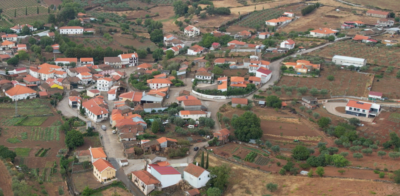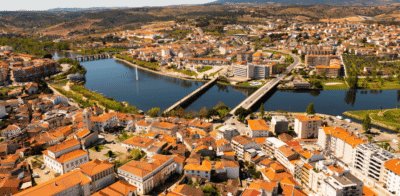
The five lots in this tender, awarded in 2025, were won by dstelecom, which will now provide coverage in the unserved areas.
The government has already signed the contract that will allow dstelecom to equip Portugal with a fiber-optic network, eliminating the current fragmentation—the so-called “white areas”—that has been affecting internet access, especially high-speed internet. The contract was signed with the five Regional Coordination and Development Commissions and the operator that won the international tender in 2025.
dstelecom will be responsible for the installation, management, operation, and maintenance of very high-capacity electronic communications networks, with the goal of providing coverage across the entire national territory. According to the government, this installation and subsequent implementation aim to bring faster internet to residential and non-residential buildings, particularly to industry, commerce, and agricultural activities.
In a statement, the Minister of Economy and Territorial Cohesion, Manuel Castro Almeida, noted that this is not merely the launch of an infrastructure project. “We are reinforcing a vision of the country. National development will never be complete as long as there are regions left on the margins of major economic, technological, and social transformations,” he emphasized.
At a time when fiber-optic networks are estimated to cover 95.2% of households in Portugal, Castro Almeida believes that it is still “very unfair to see so many areas of the country without access to cell phone or internet service,” but that the problem will be resolved promptly.
“Today we have entered a new phase in Portugal’s territorial cohesion policy, which also aims to promote economic growth by enabling the entire country—all families and businesses—to access the most modern digital infrastructure,” emphasizes the Minister of Economy.
For his part, the Minister of Infrastructure and Housing noted that “ensuring good communications and digital services makes it feasible to live and work outside metropolitan areas, promoting remote work and new hybrid models,” such as “retaining young people and skilled workers and ensuring the demographic sustainability of inland regions.”
Miguel Pinto Luz assures that “with full national coverage, we will finally be able to ensure that our country has the conditions for technological development and innovation, regardless of the region where we are located,” adding that “covering the ‘white areas’ marks a decisive step toward making the potential of 5G—and even 6G—more than just a slogan.”
The purpose of this contract is to ensure that the entire Portuguese population has access to a Gigabit network by 2030. This project calls for public funding of 30 million euros, split between the ERDF (Portugal 2030) and national public funds from the 5G auction.
It should be noted that in 2022, even before the launch of this international public tender, the National Communications Authority (Anacom) had drawn up a map showing the disparities across the country, revealing a significant disparity in coverage between the coast and the interior, as well as between the north and south of the country.
Source: Jornal de Negócios