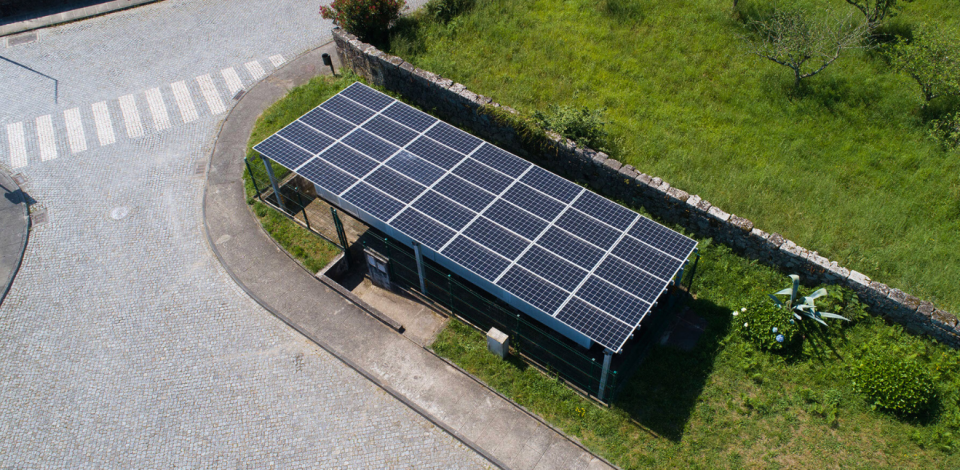
To mark National Sustainability Day, celebrated on 25 September, dstelecom has published the key findings of its 2025 ESG Report.
With its network covering more than 150 municipalities and reinforcing its contribution to digital inclusion and territorial cohesion across the country, the company reports that 99.91 per cent of the energy consumed in 2025 came from renewable sources, out of a total consumption of approximately 4,206 MWh.
This progress is underpinned by a long-term climate commitment and targets set under the Science Based Targets initiative (SBTi) to reduce greenhouse gas emissions. The company’s environmental performance is further supported by an ISO 14001-certified Environmental Management System, which focuses on the continuous improvement of environmental performance and the adoption of more efficient operational practices.
This commitment also extends to the circular economy. In 2025, dstelecom generated 105.53 tonnes of waste, around 15 per cent less than the previous year, with no hazardous waste recorded. The company has also been strengthening processes for refurbishing and reusing materials replaced in the network, as well as reverse logistics practices and circularity criteria in product procurement.
Sustainability is also integrated into the company’s relationship with the value chain, through the incorporation of environmental and social criteria into the selection and assessment of suppliers, further supported by ISO 20400:2017 certification, which focuses on sustainable procurement.
On the social front, dstelecom ended 2025 with 276 employees, an increase of 12 per cent on the previous year, whilst also strengthening investment in staff training and development, with over 10,000 hours of training delivered throughout the year. Safety, wellbeing and the work-life balance remained key priorities, through measures such as a hybrid working model, flexible working hours and initiatives to support health and wellbeing. In 2025, this approach was reinforced through NP 4552 certification, the Work-Life Balance Management System.
The social dimension also extends to the impact of the network itself. The expansion of fibre-optic infrastructure in sparsely populated areas helps to reduce geographical barriers and create better conditions for access to education, remote working and economic activity, thereby strengthening territorial cohesion and equal opportunities.
dstelecom’s progress in the area of sustainability has also been recognised externally through its participation in leading international ESG assessments, reflecting the continuous evolution of the company’s strategy and the increased integration of environmental, social and governance criteria into its operations.
“Sustainability only creates a real impact when it ceases to be a set of commitments and becomes part of the way an organisation thinks, makes decisions and acts. At dstelecom, we have sought to follow precisely this path, increasingly integrating ESG criteria into our strategy, our operations and the decisions we make on a daily basis. The results achieved are important, but what we value most is what lies behind the figures. We are talking about a network that helps to reduce regional inequalities, an increasingly efficient and responsible operation, a more sustainable value chain and an organisation that continues to put people at the centre,” says Ricardo Salgado, CEO of dstelecom.
Source: Ambiente Magazine